Design Thinking on the Factory Floor: Where Creativity Meets Industrial Equipment

If you want your factory floor to remain productive, efficient, and safe, you need to pay careful attention to how you choose, place, and maintain your industrial equipment. This, in turn, requires considerable creativity.
But how do you apply design and creative thinking to a manufacturing environment? And how do you use this approach to maximize the value of your industrial equipment?
What Design Thinking Really Means in an Industrial Setting
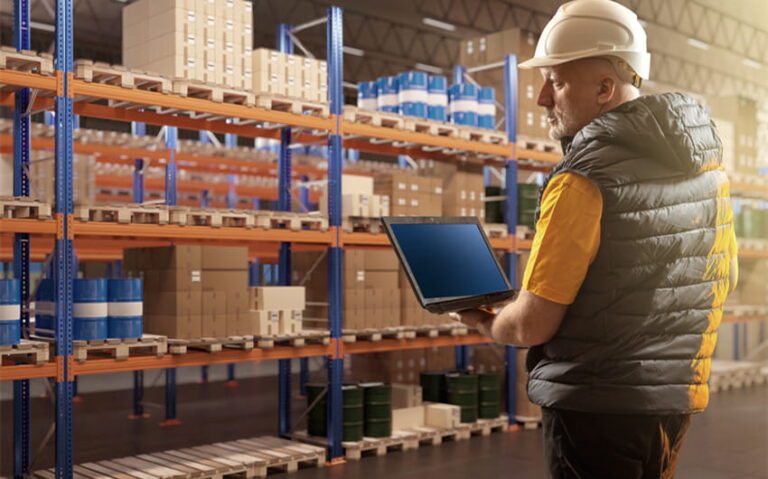
At its core, design thinking is about understanding human needs and designing solutions around them. On the factory floor, that means paying close attention to operators, technicians, maintenance staff, and supervisors — not just machines and metrics.
Instead of asking only how to make equipment faster, design thinking asks how people use it, where friction occurs, and why workarounds develop. These questions often reveal inefficiencies that aren’t visible in performance data alone. In manufacturing, design thinking isn’t abstract or artistic; it’s practical, grounded, and deeply connected to daily operations.
Why Traditional Optimization Sometimes Falls Short
Industrial environments are already optimized in many ways. Lean manufacturing standards, Six Sigma, and automation have driven remarkable gains in efficiency. Yet even in highly optimized facilities, problems persist.
Bottlenecks reappear. Errors cluster around certain tasks. Safety incidents happen in the same places. When fixes focus only on equipment or output targets, they often miss the human factors contributing to those issues. Design thinking complements traditional optimization by addressing how people actually experience systems, and it fills gaps that process maps and dashboards don’t always capture.
Human-Centered Design Improves Equipment Usability
Industrial equipment is often powerful, durable, and technically impressive, but not always intuitive. Controls may be poorly labeled, interfaces cluttered, or maintenance access awkward; over time, operators adapt, sometimes in ways that increase risk or inefficiency.
Design thinking encourages manufacturers to observe how equipment is used in real conditions, not ideal ones. These observations can lead to simple but impactful changes, such as clearer interfaces, better ergonomics, or redesigned access points. When equipment aligns more naturally with how people work, productivity improves without additional strain.
Creativity as a Safety Tool
Safety is one of the most compelling reasons to apply design thinking on the factory floor. Many safety incidents stem from predictable behaviors: rushing during peak periods, improvising when tools are unavailable, or bypassing safeguards to keep production moving.
Design thinking reframes safety by asking why people take these risks. Often, the answer lies in system design rather than individual behavior. Poor layout, unclear instructions, or unrealistic expectations push workers toward unsafe choices. Creative problem-solving helps teams redesign environments so the safest option is also the easiest one.
Breaking Down Silos Between Departments
Manufacturing facilities are often segmented by function. Engineering designs processes. Operations execute them. Maintenance responds when things break. Ultimately, each group sees the factory through a different lens.
Design thinking thrives on collaboration, and workshops, pilot programs, and cross-functional teams allow insights to flow between departments. An operator’s workaround might spark an engineering improvement. A maintenance frustration might inform future equipment purchases. When these perspectives come together, solutions tend to be more durable and widely supported.
Prototyping on the Factory Floor
One of the defining features of design thinking is rapid prototyping. In an industrial context, this doesn’t mean elaborate redesigns or expensive overhauls. It often starts small.
Teams might test a new workstation layout, trial a different tool arrangement, or adjust scheduling for a single shift. These low-risk experiments generate feedback quickly, allowing ideas to evolve before wider rollout. Prototyping reduces resistance to change because improvements are visible, practical, and informed by real-world use.
Balancing Efficiency With Adaptability
Manufacturing thrives on consistency, but rigid systems struggle when conditions change. Supply disruptions, labor shifts, and evolving customer demands require adaptability. Design thinking helps organizations build flexibility into processes without sacrificing efficiency; by understanding user needs and anticipating variation, systems become easier to adjust under pressure. This balance is increasingly valuable in an industrial landscape defined by uncertainty.
Why Design Thinking Isn’t a Trend
Design thinking isn’t about adding brainstorming sessions or colorful diagrams to manufacturing; instead, it’s about changing how problems are framed and who gets involved in solving them. As factories become more automated and interconnected, the human role doesn’t disappear; it merely changes. Design thinking ensures that systems evolve alongside the people who operate them.
That alignment isn’t a trend. It’s a long-term advantage.
The Bottom Line
Design thinking brings creativity to the factory floor in a way that’s practical, measurable, and deeply relevant. By focusing on human experience alongside technical performance, manufacturers uncover opportunities that traditional optimization often misses.
When creativity meets industrial equipment, the result isn’t chaos or inefficiency. It’s safer operations, better usability, stronger collaboration, and systems that work the way people actually do. In modern manufacturing, that combination is essential for long-term success.